By: Fr. Jhon Edinson Mena Palacios, & John Kennedy Odhiambo, MA.
Abstract
The Tuum–Parkati region in Northern Kenya has long been a hotspot for inter-ethnic conflict, particularly between the Samburu and Turkana communities. Rooted in resource scarcity, historical grievances, and marginalization, the conflict has caused immense human suffering and hindered development. The Shalom Center for Conflict Resolution and Reconciliation (SCCRR) initiated a comprehensive peacebuilding and development intervention in the region, aiming to transform conflict dynamics, foster peaceful coexistence, and build sustainable community resilience. This article presents an insightful analysis and perspectives of Shalom-SCCRR’s multi-dimensional intervention, highlighting key activities, impacts, and lessons learned.
- Introduction
Northern Kenya’s arid and semi-arid lands (ASALs) are characterized by complex socio-economic-political dynamics and environmental vulnerabilities that exacerbate inter-communal conflicts. The Tuum–Parkati corridor, straddling Samburu North Sub-County and Turkana territories, epitomizes these challenges. Historically, the Samburu and Turkana communities have clashed over access to water and pasture, livestock, and political tensions often resulting in cycles of violent retaliation. Moreover, weak governance, arms proliferation, arms trafficking, and underdevelopment have entrenched these hostilities and at the same time prolonged the marginalization and territorial stigma.

To address the systemic causes of conflict, Shalom-SCCRR launched an integrated conflict transformation and peacebuilding initiative. The approach was informed by thorough conflict research and premised on the participation of all stakeholders in the peace process. Shalom-SCCRR’s model emphasizes community ownership, education, interethnic dialogues and negotiations, and the development of peace dividends.
2. Conflict Analysis and Stakeholder Engagement
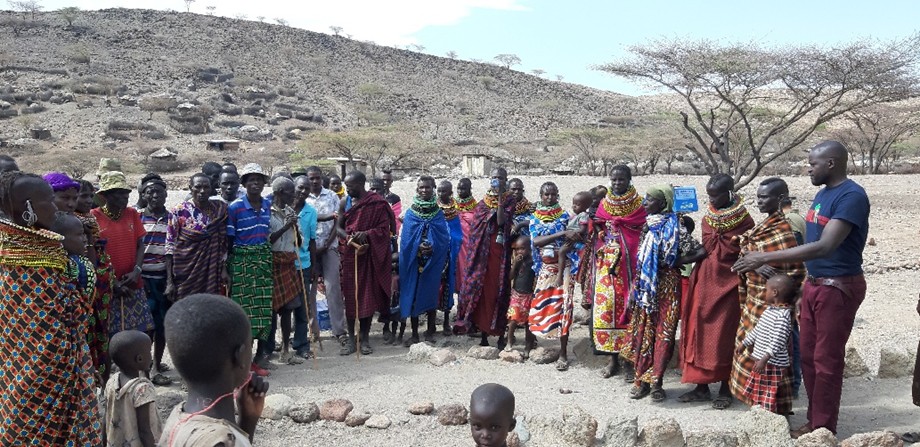
Shalom-SCCRR began its intervention with rigorous conflict analysis and stakeholder mapping. This process involved collecting qualitative and quantitative data on the root causes, triggers, actors, and conflict systems at play in Tuum and Parkati. Particular attention was given to seasonal migratory routes, resource competition zones, and historical animosities.
Stakeholder engagement included elders, chiefs, women leaders, youth representatives, religious leaders, and local government officials, without forgetting that the impacts of this process on the children guarantee peace in generational change. This inclusive approach allowed Shalom-SCCRR to build trust and ensure legitimacy in its programming. Identifying power dynamics and community narratives around the conflict enabled the team to design culturally sensitive interventions rooted in local realities.
3. Peacebuilding Forums and Dialogue Processes
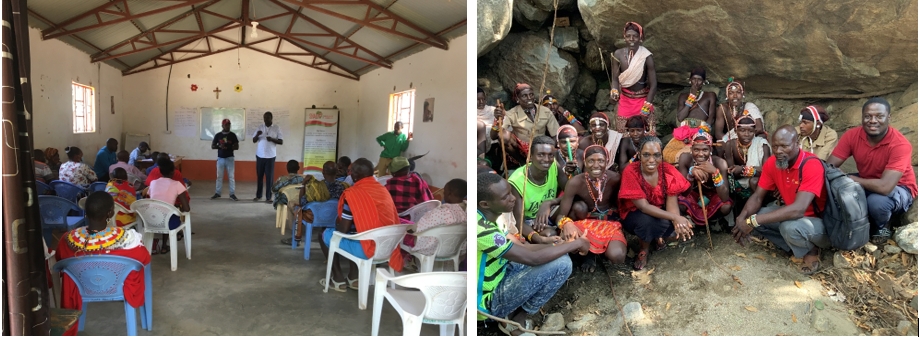
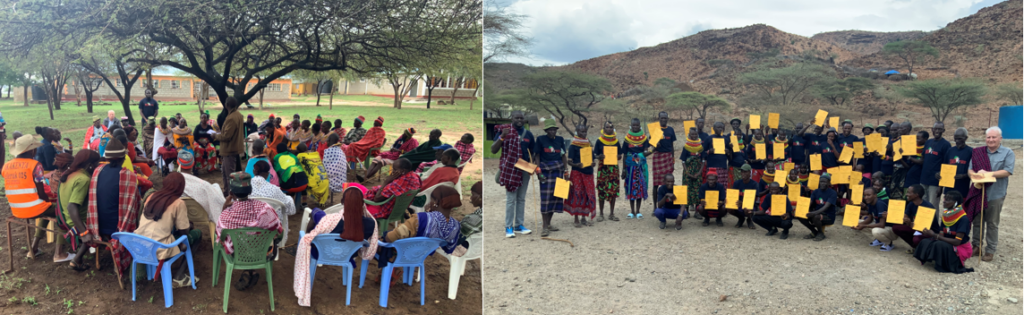
Central to SCCRR’s strategy was the facilitation of inter-community dialogue forums. These dialogues provided safe, structured spaces for both Samburu and Turkana communities to air grievances, explore shared concerns, and collectively envision peaceful coexistence, knowing that Shalom-SCCRR is the pioneer in the region with this initiative.
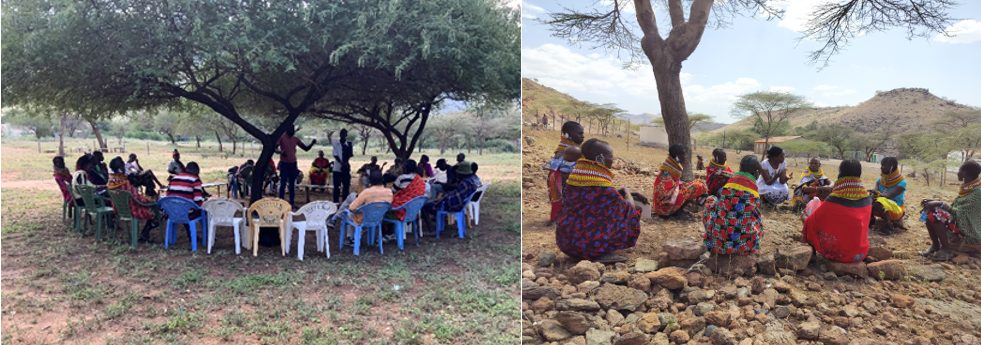
Peacebuilding workshops focused on conflict resolution skills, trauma healing, reconciliation, and nonviolent communication. Participants were encouraged to share personal stories, recognize the impact of violence on all sides, and develop joint commitments to peace. Shalom-SCCRR also supported traditional conflict resolution mechanisms, integrating them with modern peacebuilding practices.
Notably, women and youth—often excluded from formal peace processes—were intentionally included. Women peace agents received training to mediate intra-household and inter-family disputes, while youth leaders were empowered to become champions of nonviolence within their peer groups.
4. Education and School Development Support
Recognizing that education is a cornerstone of long-term peace, Shalom-SCCRR invested in the development of schools in Tuum and Parkati, including the communities of Seisei, Simale, Uaso Rongai, and South Horr. In conflict-affected areas, schools serve not only as centers of learning but also as neutral grounds that can foster cross-community relationships. Shalom-SCCRR’s educational support included classroom construction and rehabilitation, provision of desks and learning materials, water system, fencing and construction of sanitation facilities. Equally important was the implementation of peace education programs targeting students and teachers alike. Teachers were trained in Conflict Transformation and Peacebuilding techniques inclusive of Shalom-SCCRR unique approach while pupils were trained and participated in peace club activities that promoted inter-ethnic collaboration and mutual respect.
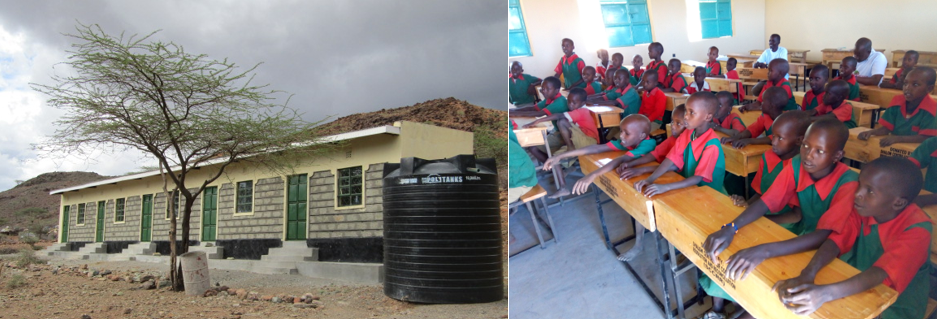
“This component significantly improved school enrollment and retention, especially among girls who had previously dropped out due to insecurity or lack of menstrual hygiene facilities. It also laid the foundation for a new generation to grow up free from the biases and animosities that fueled conflict,” Ms. Agnes Lesilila, Group Animator Tuum Shalom Peace Group.
5. Capacity Building and Joint Development Initiatives
To ensure sustainability, Shalom-SCCRR focused on strengthening the capacity of local peace actors. Key opinion shapers and local leaders including community elders, faith-based leaders, local administrators, and women and youth influencers were trained on in-depth conflict analysis, conflict transformation and peacebuilding techniques leading to problem-solving workshops.

Parallel to peacebuilding activities, Shalom-SCCRR supported joint development initiatives that incentivized cooperation. Shared water points, community grazing plans, and joint security patrols were introduced. These projects reduced competition over resources and built interdependence among the communities.

Community peace committees were formed with balanced representation, tasked with resolving emerging disputes and liaising with county officials. Their role in preventing relapse into violence has been critical.
“The impacts of the capacity building and the formation of peace committees have produced abundant fruit in our communities through enhancing joint inter-ethnic collaboration, promoting peace culture in schools, capacity building of key stakeholders, and promoting women empowerment and livelihood programs,” Fr. Carlos, Assistant Parish Priest, Tuum Parish.
6. Monitoring, Evaluation, and Impact Assessment
Shalom-SCCRR established a robust monitoring and evaluation framework to track progress, assess outcomes, and adapt strategies. Conflict early warning systems were instituted, with trained community resource persons reporting potential flare-ups for timely intervention.
“The interventions yielded tangible impacts: a significant reduction in violent incidents, improved inter-community relations, higher school attendance, and increased collaboration on shared development projects. Most importantly, local communities have embraced ownership of the peace process,” Mr. Sylvester Aboto Silale, Shalom-SCCRR Lead Community Facilitator, Parkati.
7. Appreciation
We extend our deepest appreciation to the donors, partners, and associates of Shalom-SCCRR for your steadfast support in advancing peacebuilding, conflict transformation, and development in vulnerable and conflict-affected regions. Your unwavering commitment and generous contributions—financial, technical, and moral—have enabled Shalom-SCCRR to facilitate sustainable solutions in deeply divided communities. One notable example is the Tuum-Parkati area, where your support has helped implement successful interventions that have reduced intercommunal tensions, enhanced educational access, and empowered local leadership structures toward peaceful coexistence.
A special tribute goes to Rev. Fr. Patrick Devine, the International Chairman of Shalom-SCCRR, whose extraordinary leadership and tireless fundraising efforts have been instrumental in mobilizing substantial resources and forging vital partnerships that made Shalom-SCCRR work to be appreciated far and beyond just to mention but a few: the recognition by United Nations (UN), visit of Irish Government Delegation to Kenya the recognition by learning institutions such as Tangaza University, Harvard Law School, Kennedy School of Government, Fordham University (NY), Queen’s University Belfast (Northern Ireland, UK), Maynooth University (Ireland), Tangaza University etc.

We also sincerely acknowledge Shalom-SCCRR’s highly professional team, whose expertise, dedication, and courage on the ground—especially in challenging areas such as Tuum-Parkati—have made a lasting impact. Their evidence-based approaches and community-centered engagement continue to inspire transformation and hope for a more peaceful future.
8. Conclusion and Lessons Learned
Shalom-SCCRR’s intervention in the Tuum–Parkati corridor demonstrates that sustainable peace in conflict-prone pastoralist regions is achievable through a multi-sectoral, community-driven approach. Key lessons include the importance of integrating education with peacebuilding efforts, ensuring inclusive stakeholder engagement, and strengthening local capacities for conflict resolution.
By addressing both the symptoms and structural causes of conflict, Shalom-SCCRR helped lay the groundwork for a more peaceful, resilient, and united future in Northern Kenya. Replication of this model in other conflict-affected regions holds promise for broader transformation across Eastern Africa.
Authors:
Fr. Jhon Edinson Mena Palacios. MXY.
John Kennedy Odhiambo, Shalom-SCCRR Samburu Project Officer.
Relevant Links
- Shalom-SCCRR. (2026, March 16). 2025 School/Educational Development Results and Achievements. https://shalomconflictcenter.org/2025-school-educational-development-results-and-achievements/
- Shalom -SCCRR. (2026, March 2). 2025 Conflict Transformation & Peacebuilding Results and Achievements. https://shalomconflictcenter.org/2025-conflict-transformation-peacebuilding-results-and-achievements/
- Shalom-SCCRR. (2026, February 18). 2025 Shalom Empowerment Center (SEC) Addressing Violence Against Women and Children Results and Achievements. https://shalomconflictcenter.org/2025-shalom-empowerment-center-sec-addressing-violence-against-women-and-children-results-and-achievements/
- Shalom-SCCRR. (2025, December 27). Launching Forth with Noble Expectations: the ‘Center for Conflict Transformation and Peacebuilding’ (CCTPB) in Tanzania, East Africa. https://shalomconflictcenter.org/launching-forth-with-noble-expectations-the-center-for-conflict-transformation-and-peacebuilding-cctpb-in-tanzania-east-africa/
- Odhiambo, K., Osiro, M., & Noonan, O. (2025, Feb 21). The Successes of Shalom-SCCRR Conflict Transformation and School/Educational Development Interventions in Tuum, Parkati, Samburu County, Kenya. https://shalomconflictcenter.org/the-successes-of-shalom-sccrr-conflict-transformation-and-school-educational-development-interventions-in-tuum-parkati-samburu-county-kenya/
- Odhiambo, K. (2020). Briefing Paper No. 9: An Analysis of Turkana-Samburu Conflict. An Assessment of Inter-Communal Cohesion. https://shalomconflictcenter.org/briefing-paper-no-9/
- Adhiambo, V. (2023, June 25). “Transforming Manifest Violence >>> Negative Peace >>> Positive Peace” https://shalomconflictcenter.org/transforming-manifest-violence-negative-peace-positive-peace/
- Macharia, A. (2018, April 30). SCCRR’s Achievements: A Focus on Education For Peace. https://shalomconflictcenter.org/sccrrs-achievements-a-focus-on-education-for-peace/
- Kateregga, G. (2017, September 15). Blossoming Peace Among Turkanas and Samburus in Northern Samburu. https://shalomconflictcenter.org/blossoming-peace-among-turkanas-and-samburus-in-northern-samburu/
- Okoth, G. (2016). Samburu and Turkana Women Unite in Historic Mission to Sustain Peace in Samburu North. https://shalomconflictcenter.org/samburu-and-turkana-women-unite-in-historic-mission-to-sustain-peace-in-samburu-north/
- Chelanga, J. & Erot, P. (2018, April 20). SCCRR Contributes to Peaceful Co-Existence in Samburu County. https://shalomconflictcenter.org/sccrr-contributes-to-peaceful-co-existence-in-samburu-county/
- Erot, P. (2016, December 16). Irish Government Delegation Witnesses Peace and Development in Action. https://shalomconflictcenter.org/irish-government-delegation-witnesses-peace-in-action/
- Harkin, G. (2016, December 10). ‘We’ve helped bring peace to Kenyan tribes – but now we’ve shown them the way, the peace process is theirs’. Irish Independent. https://www.independent.ie/world-news/africa/weve-helped-bring-peace-to-kenyan-tribes-but-now-weve-shown-them-the-way-the-peace-process-is-theirs/35283114.html
- Shalom-SCCRR. (2016, December 10). Irish Minister Visits Shalom, Praises Work for Peace. https://shalomconflictcenter.org/irish-minister-visits-shalom-praises-work-for-peace/
- Okoth, G. (2017, June 7). Evidence: Shalom’s Methodology leads to Conflict Prevention and Peacebuilding Progress. https://shalomconflictcenter.org/evidence-shaloms-methodology-leads-to-conflict-prevention-and-peacebuilding-progress/
- Koech, M. (2015, June 20). Shalom Leading Peace Process in Samburu County.https://shalomconflictcenter.org/shalom-leading-peace-process-in-samburu-county/
- Atieno, E. (2015, February 22).Tuum and Parkati: Two Villages Work for Non-Violence and Reconciliation.https://shalomconflictcenter.org/tuum-and-parkati-two-villages-work-for-non-violence-and-reconciliation/
