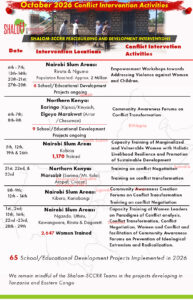
(Perspective on Shalom-SCCRR’s Transformative Humanitarian, Conflict Transformation, Peacebuilding, and Development work in Marginalized Conflict Environments in Eastern Africa).
https://shalomconflictcenter.org/
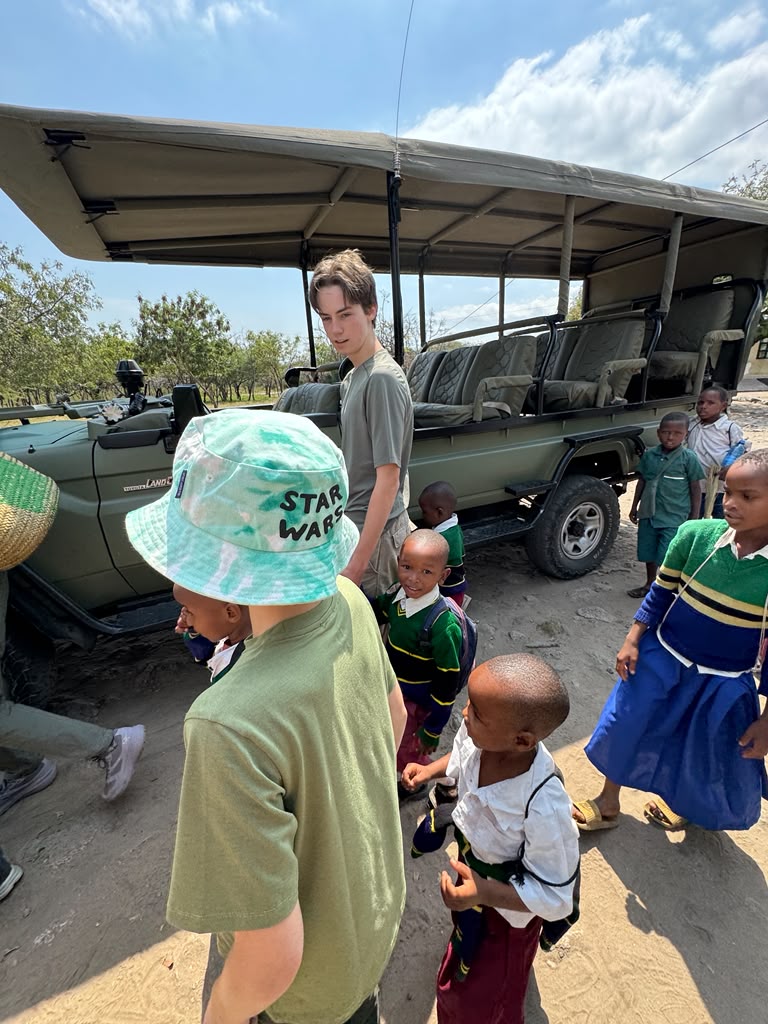
The Shalom Center for Conflict Resolution and Reconciliation (SCCRR), registered in the United States as the Shalom Center of Africa (SCOA), is a nonprofit 501(c)(3) interreligious and non-governmental organization working mainly in conflict and poverty zones in Eastern Africa. The organization was founded by Rev. Dr. Patrick Devine in 2009. On average, since its founding, 95% of the organization’s funding goes directly into conflict transformation, peacebuilding, peace education, and school-educational based development projects. All of Shalom’s team members are highly qualified in peace studies and social development. Its main objective is to resolve conflict by educating and empowering communities to create better futures for themselves and their children. Shalom’s mission is grounded in core values such as the dignity of all human life, human rights, democracy, environmental security, and respect for ethnic and religious diversity.
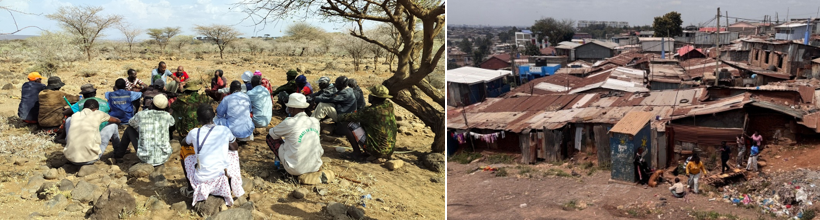
Shalom-SCCRR focuses on preventing and transforming major types of conflict, including interethnic violence, religious ideological extremism that can lead to terrorism, and violence against women and children, especially in densely populated urban slums and informal settlements like those around Nairobi. Their work includes preventing radicalization, countering recruitment into extremist groups, and addressing the social conditions and marginalization that fuel instability and violence.

Shalom’s interventions begin with being invited by local stakeholders such as government officials, elders, or community leaders, ensuring trust and cooperation. They build relationships within communities and carefully listen to all sides of a conflict to understand its root causes, which are often complex and constantly changing. By addressing these underlying causes, they aim to resolve conflict issues at their source. In high-risk situations, they also implement safety measures to protect their peacebuilders.
In conflict environments, Shalom-SCCRR follows a structured peacebuilding process that may begin with humanitarian aid to meet basic needs, followed by research into the causes of conflict. They work to stop active violence and achieve a ceasefire (negative peace), then address structural issues like lack of schools, healthcare, justice systems, and marginalization, just to mention a few. Through rebuilding infrastructure and improving social systems, they aim to move toward positive peace, where forgiveness is possible and reconciliation is achieved. The different communities that were in conflict now commit to each other’s long-term well-being, security, and development.
To achieve negative and positive peace as steps toward lasting reconciliation, Shalom conducts research, trains and empowers local leaders, and strengthens the capacity of governments and institutions to manage and transform conflict. They also influence peace policies and invest in infrastructure, especially interethnic and interreligious schools where pupils and students from different backgrounds learn together, helping to build understanding and unity across communities. The parents and local community leaders also play an important role in the progress and development of these schools.
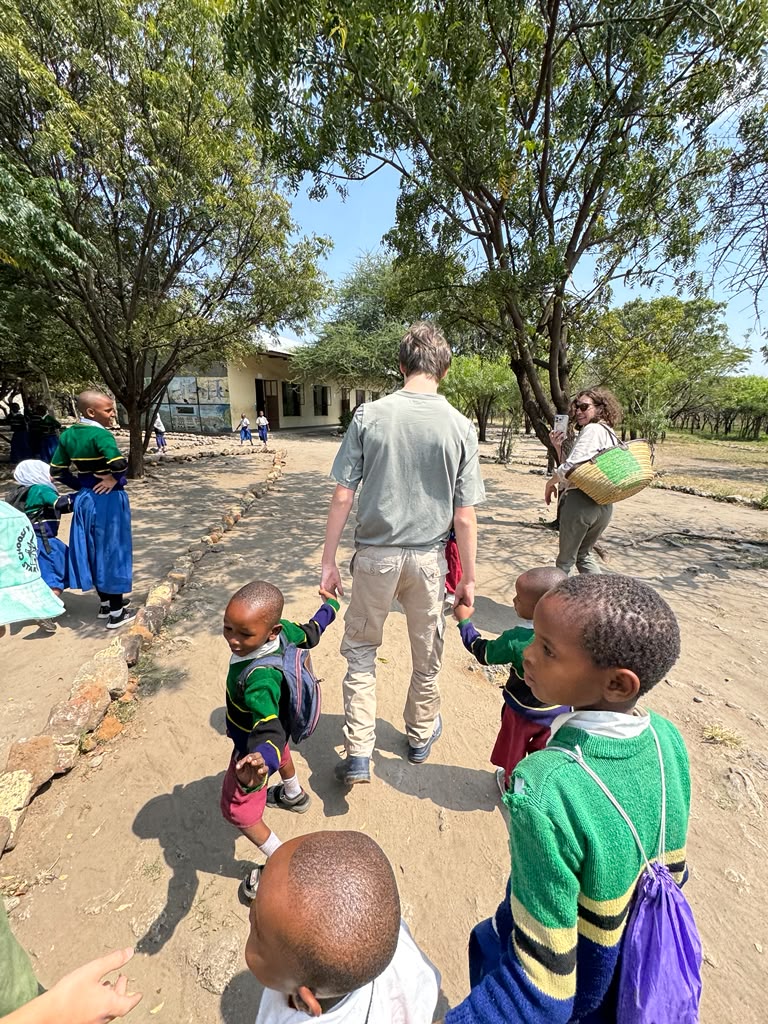
Shalom’s work is driven by the belief that ongoing marginalization and violence prevent communities from developing and undermine the ability of values like peace, justice, truth, and mercy to take deep communal root. Without stable infrastructure, real development is impossible. Conflict often destroys essential social systems necessary for people to live normal lives and experience authentic peace. By transforming conflict, Shalom-SCCRR also aims to help individuals experience a deeper sense of connection to shared human and spiritual values. Since its founding in 2009, the organization has completed hundreds of school-educational development projects, conducted over a thousand conflict transformation and peacebuilding training workshops, and trained thousands of key influential opinion leaders, including women in conflict-affected communities.
I was inspired to become involved in this organization because of its vision, mission, and values. Shalom’s approach and interventions are applicable to conflict transformation and peacebuilding around the world. I was delighted to read that Shalom’s founder was honored with the International Caring Award in 2013, succeeding His Holiness the Dalai Lama, who was selected for the award the year prior. General Colin Powell, Former United States Secretary of State, was the guest of honor at the ceremony. It’s my fervent hope that more people continue to become involved with this charity, to help as many people as possible in Africa. May I also express my thanks to all the people who have made the work and achievements of the Shalom Center for Conflict Resolution and Reconciliation (SCCRR) possible. It is also worth noting that Rev. Dr. Patrick Devine has given presentations and lectures on the Shalom methodology and results at numerous renowned universities in the USA and other parts of the world. I am proud to say that I have the opportunity to commit myself to promoting, fundraising, and inspiring other participants to this charity.
Sincerely,
Jack Regan

Shalom Peace Club USA.
44 West 28th Street, 11th Fl, New York, New York 10001. USA
29th April, 2026.
Shalom-SCCRR’s affiliate organisation in the USA is the Shalom Center of Africa (SCOA).
Shalom Center of Africa
117 West 28th Street- 2nd FL
New York, NY 10001
Relevant Links
- Shalom-SCCRR (2026, April 22). Shalom-SCCRR 16 Years Results and Achievements. https://shalomconflictcenter.org/shalom-sccrr-16-years-results-and-achievements/
- Moran, M. (2020). Eastern Africa: Shalom-SCCRR receives United Nations (UN) Accreditation. https://shalomconflictcenter.org/3901-2/
- Shalom-SCCRR Brochure. https://shalomconflictcenter.org/wp-content/uploads/2026/01/Shalom-SCCRR-Brochure-2025.pdf
- Shalom-SCCRR. (2022). Shalom Empowerment Center (SEC) Addressing Violence against Women and Children: Concept Document. https://shalomconflictcenter.org/eastern-africa-shalom-empowerment-center-sec-addressing-violence-against-women-and-children-concept-document/