“Shalom-SCCRR’s conflict transformation and peace building interventions empower the emergence of inter-ethnic and inter-religious school/educational development projects. These results, in turn, lead to the stabilization and sustainability of inter-communal peace and development between the former enemies.” Rev. Dr. Patrick Devine, Shalom-SCCRR International Executive Chairman
- Between January and June 2025, Shalom–SCCRR implemented 30 School/Educational Development projects.
- An additional 13 projects are currently in the implementation process; expected completion date being October 2025.
- Impacting the Lives of More Than 10,000 Learners.
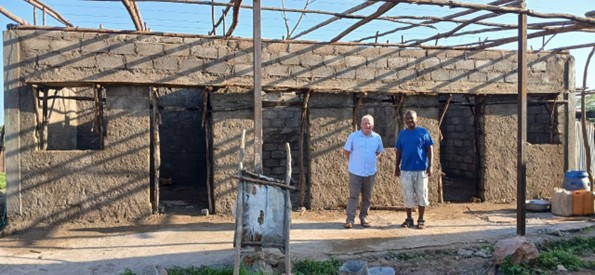
Construction and Renovation of Classrooms
The construction and renovation of classrooms have created safe, dignified, and comfortable learning spaces for students who once had to attend lessons under a shade, sitting on bare ground or sand.
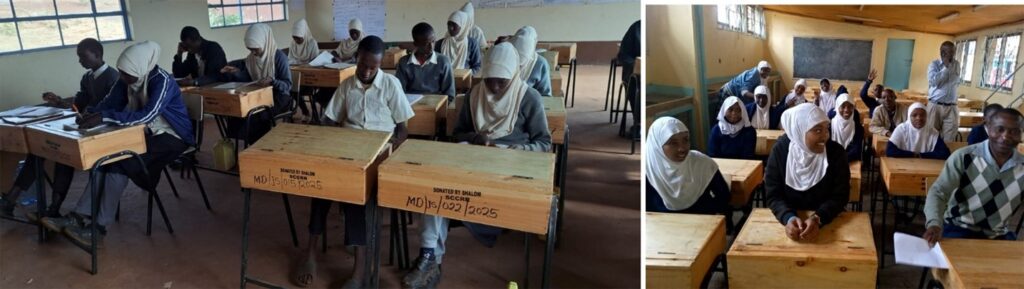
Equipping Classrooms: Standard Desks and Lockers for Learners
Shalom-SCCRR support helped improve the desk-to-pupil ratio from 1:5 to 1:2, resulting in a 150% improvement.
Textbooks for Every Learner
In several schools supported by Shalom this year, the textbook-to-pupil ratio previously stood at 1:10. With Shalom–SCCRR’s intervention, every learner now has direct access to a textbook (1:1 textbook-to-pupil ratio). This achievement has greatly enhanced learning and academic performance.

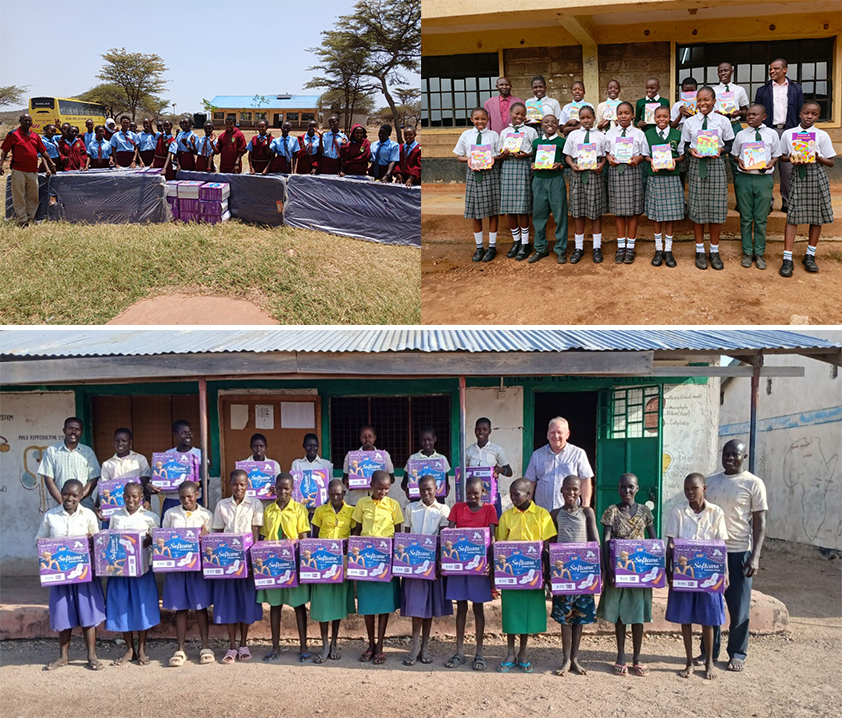
Empowering Girls’ Education
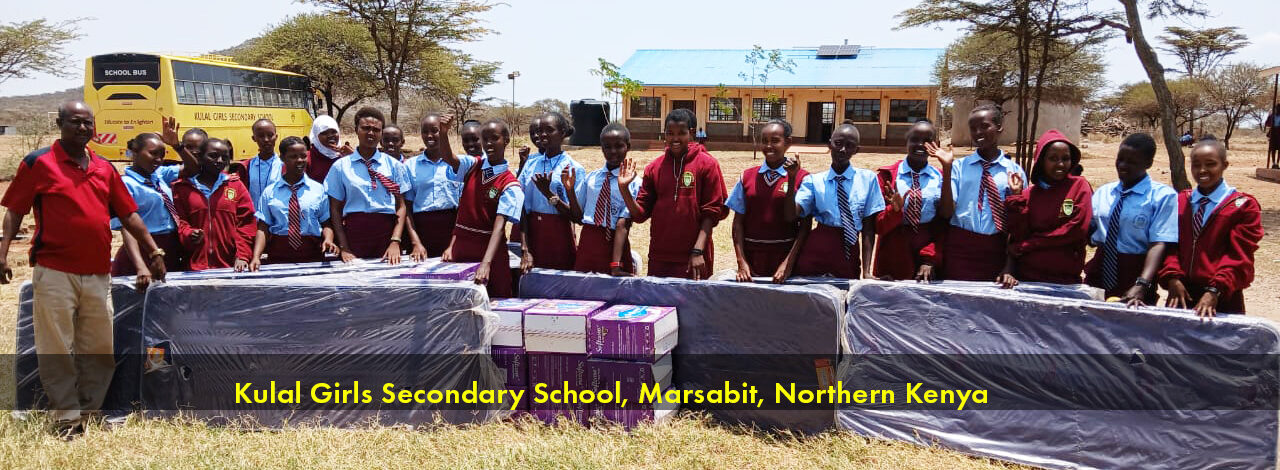
Improved access to sanitary towels has significantly reduced school dropouts and strengthened the retention of girls. In many schools, absenteeism has dropped by more than 80%, enabling girls to attend classes consistently, improve their academic performance, and build greater confidence.
Enhanced School Sanitation Facilities
The construction of standard toilets and other sanitary facilities has significantly improved the pupil-toilet ratio, which has helped contain related illnesses.

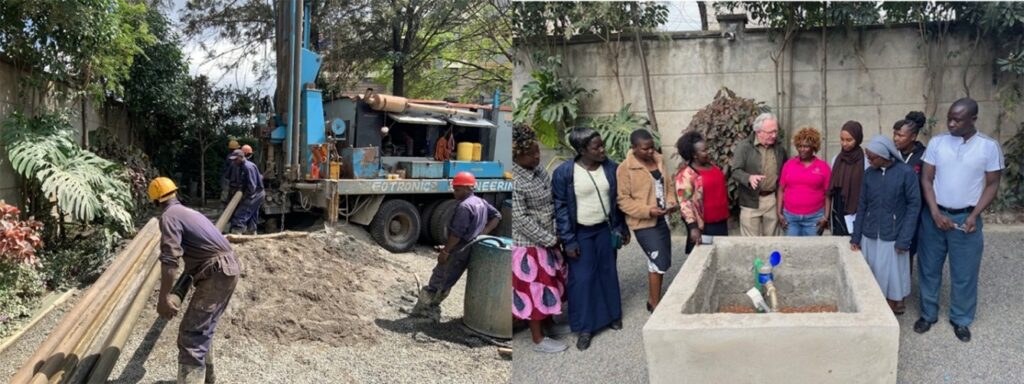
Completed Water Project: Shalom Empowerment Center Addressing Violence Against Women and Children
The water project ensures reliable access to safe, clean water in an environment where scarcity is a daily reality, improving hygiene and reducing waterborne diseases.
Shalom-SCCRR Solar Lighting Projects
Shalom-SCCRR’s solar lighting installations in schools have significantly improved academic performance by extending study hours for students in remote, marginalized pastoralist communities where electricity is unavailable or unreliable.
In addition to enhancing education, solar lighting has created a safer environment for both learners and teachers, particularly in regions prone to insecurity and wildlife encounters.
These Solar projects have also powered essential school facilities, including boarding/live-in areas, science laboratories, and other facilities, enabling better living conditions and a significant improvement in science subjects, particularly in the Shalom-SCCRR-supported schools in conflict environments.
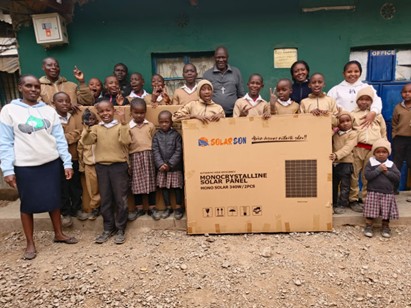
“On behalf of the Valley Bridge School fraternity, I sincerely appreciate Shalom-SCCRR’s educational support,” said Mr. Richard Nyaga, the headteacher. “The provision of lockers and chairs has been a great boost for our pupils from the Kariobangi slums. They now have a more conducive learning environment, which will significantly enhance their academic performance. Schools in this slum face many challenges, but this support will positively impact the lives of our 1,047 pupils. We extend our heartfelt gratitude to Shalom-SCCRR, its management, donors, and supporters for helping to improve the quality of education for disadvantaged children and giving them the opportunity to build a brighter future.”
As we look ahead, the schools in these marginalized, impoverished, and conflict-affected environments reflect a deep yearning and urgent need for peace and educational development. Many of these communities, often forgotten, are burdened by dilapidated school infrastructure, a lack of basic teaching and learning assets, and the recurring challenges of drought, exploitation, underdevelopment, and the resulting cycles of conflict.
Thank you for continuing to walk with us on this journey of empowerment, so that together we can give even more children the chance to learn, grow, and thrive. Your unwavering support and solidarity are very much appreciated.” Rev. Dr. Oliver Noonan Shalom-SCCRR Executive Director.
Impact of Conflict Transformation & Peacebuilding Interventions in the Past 2 Years
Shalom-SCCRR’s Interventions in Conflict Transformation, Peacebuilding, School/Educational Interventions and Women Empowerment in Conflict-prone areas of Eastern Africa have achieved noteworthy outcomes and impacts.
4 Peace Accords were signed between previously conflicting ethnic communities in the following locations:
- Molo and Kuresoi, Nakuru County – A peace agreement was signed between several ethnic communities (Kikuyu, Kalenjin, Kisii, Luhya, Luo and Kamba), immediately impacting approximately 137,000 people and 415,000 indirectly
- Muhoroni/Tinderet (Kisumu and Nandi Counties) – A peace agreement was signed between Luo and Nandi ethnic communities, immediately impacting approximately 104,000 people and 280,000 indirectly.
- Lokitonyala/Loreng’kipi (Turkana and West Pokot Counties) – A peace agreement was signed between the Turkana and Pokot ethnic communities along the border of Turkana and West Pokot Counties, immediately impacting approximately 44,000 people directly and 180,000 indirectly.
- Tuum/Parkati, Samburu County – A peace agreement was signed between the Turkana and Samburu ethnic communities, immediately impacting approximately 26,200 people directly and 73,000 indirectly.
15 Years of Impact: Shalom-SCCRR School/Educational Development Projects Implemented —in Numbers
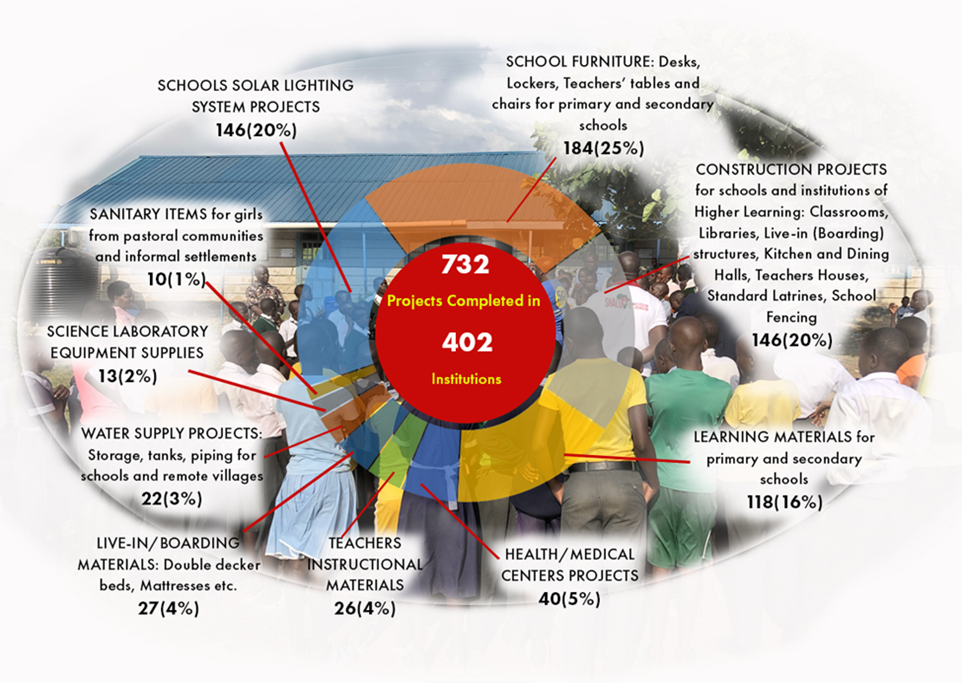
By: Shalom-SCCRR’s Communications and Monitoring, Evaluation, Research, Learning (MERL) Departments.
RELEVANT LINKS
- Shalom-SCCRR. (2025). School/Educational Development Results and Achievements. https://shalomconflictcenter.org/school-educational-development-results-and-achievements/
- Shalom-SCCRR. (2025, June 4). Shalom-SCCRR 15 Years Results and Achievements. https://shalomconflictcenter.org/shalom-sccrr-15-years-results-and-achievements/
- Devine, P.R. (2025, May 9). Shalom-SCCRR Chairman’s Report for 2024; Rev. Dr. Patrick Devine. https://shalomconflictcenter.org/shalom-sccrr-chairmans-report-for-2024-rev-dr-patrick-devine/
- Odour, K. (2025, August 1). Fostering the culture of peace in learning institutions: Shalom-SCCRR’s Peace Education and Development Approach. https://shalomconflictcenter.org/fostering-the-culture-of-peace-in-learning-institutions-shalom-sccrrs-peace-education-and-development-approach/
- Domit, P. S. & Devine, P. (2024). Shalom Center for Conflict Resolution and Reconciliation (SCCRR): Addressing the Violence of Human and Organ Trafficking. https://shalomconflictcenter.org/shalom-center-for-conflict-resolution-and-reconciliation-sccrr-addressing-the-violence-of-human-and-organ-trafficking/
- Shalom-SCCRR. (2024, Nov 24). World Children’s Day 2024. Shalom-SCCRR Transforming Children’s Lives Through Education and Peace-Building. https://shalomconflictcenter.org/transforming-childrens-lives-through-education-and-peace-building/
- Shalom-SCCRR. (2024, Nov 13). Recent Peace Results and Shalom-SCCRR School/Educational Developments Projects. https://shalomconflictcenter.org/shalom-sccrr-school-educational-developments-projects/
- Magero, A. & Mwangi, F. (2024, Feb 22). Shalom-SCCRR School and Educational Institutions Along the Kisumu-Nandi Borderline in Kenya contributed immensely to its Conflict Transformation and Peacebuilding Mediation. https://shalomconflictcenter.org/shalom-sccrr-school-and-educational-institutions-along-the-kisumu-nandi-borderline-in-kenya-contributed-immensely-to-its-conflict-transformation-and-peacebuilding-mediation/
- Magero, A. (2024, Aug 9). The Successes of Shalom Conflict Transformation and School Educational Development Transformative Interventions in Molo and Kuresoi Sub-Counties in Nakuru County, Kenya. https://shalomconflictcenter.org/the-successes-of-shalom-conflict-transformation-and-school-educational-development-transformative-interventions-in-molo-and-kuresoi-sub-counties-in-nakuru-county-kenya/
- Awed, A & Kibe, E. (2021, July 12). Voices from the Ground: Shalom-SCCRR’s Educational and Development Interventions Promoting Peace among Pastoral Communities in Lorgum Area, Turkana County. https://shalomconflictcenter.org/voices-from-the-ground-shalom-sccrrs-educational-and-development-interventions-promoting-peace-among-pastoral-communities-in-lorgum-area-turkana-county/
- Magero, A. (2021, May 25). Protecting children’s lives, securing infrastructure by Shalom-SCCRR at Kipsisiin Primary School in the volatile Kisumu/Nandi borderline. https://shalomconflictcenter.org/protecting-childrens-lives-securing-school-infrastructure-by-shalom-sccrr-at-kipsisiin-primary-school-in-the-volatile-kisumu-nandi-borderline/
- Butler, J. (2023). Harvard Kennedy School; A Conversation with Rev. Dr. Patrick Devine and Paula Soumaya Domit. https://shalomconflictcenter.org/wp-content/uploads/2024/01/Harvard_Kennedy_School_Article_WITH_PHOTOS_MAP_1_17_24_FINAL.pd
- Akedi, J. (2021). Shalom-SCCRR supporting the restoration of learning amidst Covid-19 effects: An account of Nairobi’s informal settlements (Slums). https://shalomconflictcenter.org/shalom-sccrr-supporting-the-restoration-of-learning-amidst-covid-19-effects-an-account-of-nairobis-informal-settlements-slums/
- Awed, A. (2021). The Girl-Child: Shalom-SCCRR Impacting Education & the Lives of Young Girls in Marginalized and Remote Locations in Eastern Africa. https://shalomconflictcenter.org/the-girl-child-shalom-sccrr-impacting-the-lives-of-young-girls-in-marginalized-and-remote-locations-in-eastern-africa/
- Awed, A. & Kibe, E. (2021, July 21). Voices from the Ground: Shalom-SCCRR’s Educational and Development Interventions Promoting Peace among Pastoral Communities in Lorgum Area, Turkana County. https://shalomconflictcenter.org/voices-from-the-ground-shalom-sccrrs-educational-and-development-interventions-promoting-peace-among-pastoral-communities-in-lorgum-area-turkana-county/
- Akedi, J. (2020). Thousands of Children and Families in Nairobi’s Korogocho Slum Benefit from Shalom-SCCRR Transforming Interventions. https://shalomconflictcenter.org/thousands-of-children-and-families-in-nairobis-korogocho-slum-benefit-from-shalom-sccrr-transforming-interventions/
- Macharia, A. (2019, Dec 19).SCCRR-Shalom providing a Brighter Future for the Children of the Ilemi Triangle. https://shalomconflictcenter.org/sccrr-shalom-providing-a-brighter-future-for-the-children-of-the-ilemi-triangle/