By: Caleb Ngala, in collaboration with Moses Osiro
My journey with the Shalom Center for Conflict Resolution and Reconciliation (Shalom-SCCRR) has been one of growth, transformation and purpose. Since joining the organization as a Community Facilitator in 2016, I have had the opportunity to learn, engage and actively participate in community peacebuilding initiatives that have positively impacted both my personal life and the Mathare community at large.
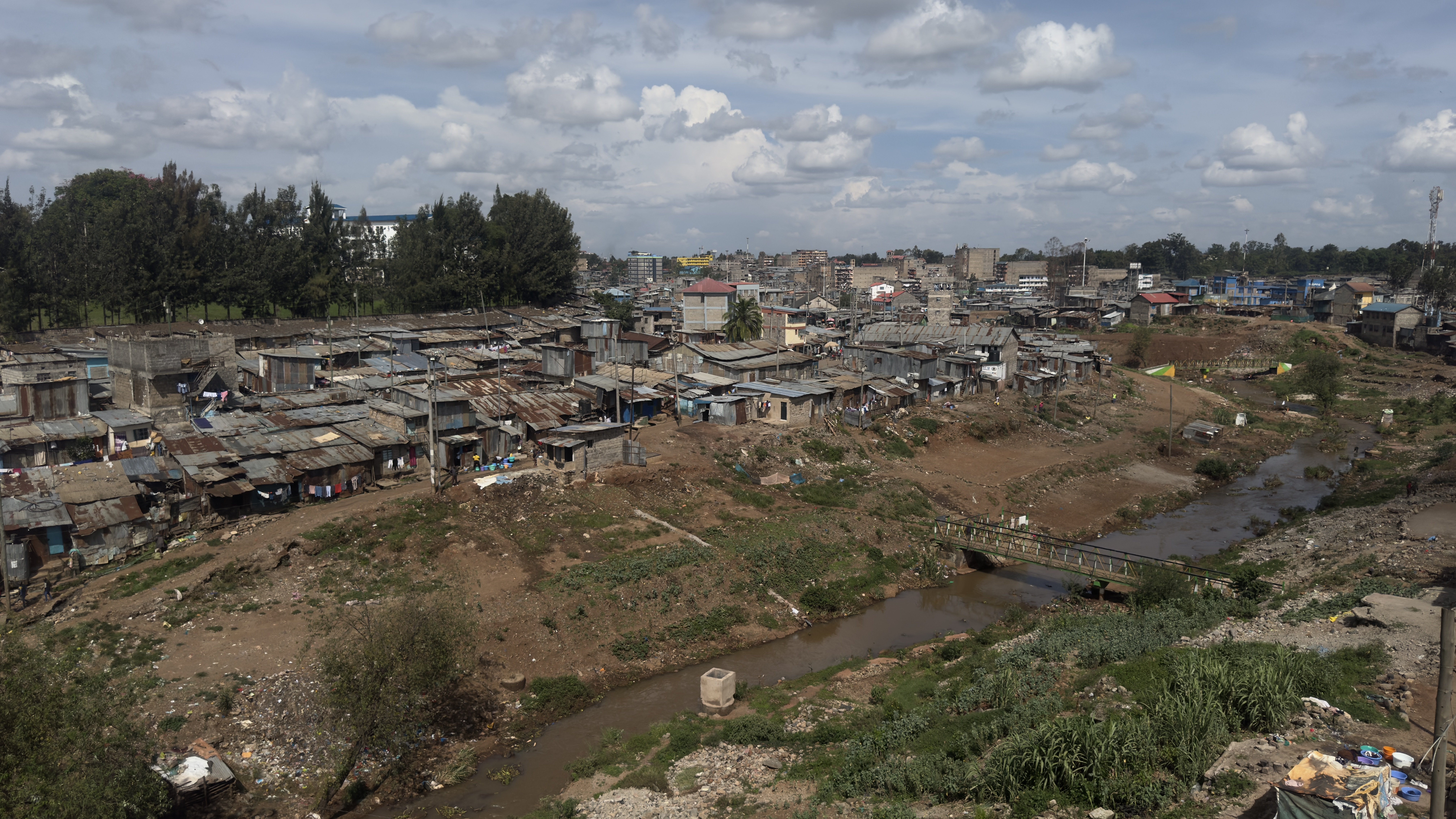
An aerial view of Mathare slums where Shalom-SCCRR works in pursuit of Conflict Transformation and Peacebuilding.
When I first became part of the Shalom-SCCRR Mathare Peace Group as a youth leader, I was eager to understand how communities in Mathare, which are frequently affected by conflict issues such as unemployment, drug abuse and social inequalities, could be transformed through peace initiatives and community engagement. Over the years, I have been thoroughly trained by and developed capacity through Shalom-SCCRR’s training modules on: Conflict Mapping, Paradigms of Conflict Analysis, Conflict Transformation, Conflict Negotiation-Mediation- Reconciliation, Radicalization and Ideological Extremism..
Through the training workshops and community forums organized by Shalom-SCCRR in collaboration with the community, I gained valuable knowledge and skills in peacebuilding, leadership, conflict resolution, community facilitation and youth engagement. These experiences shaped my understanding of the important role young people play in promoting peace and social cohesion within their respective communities.
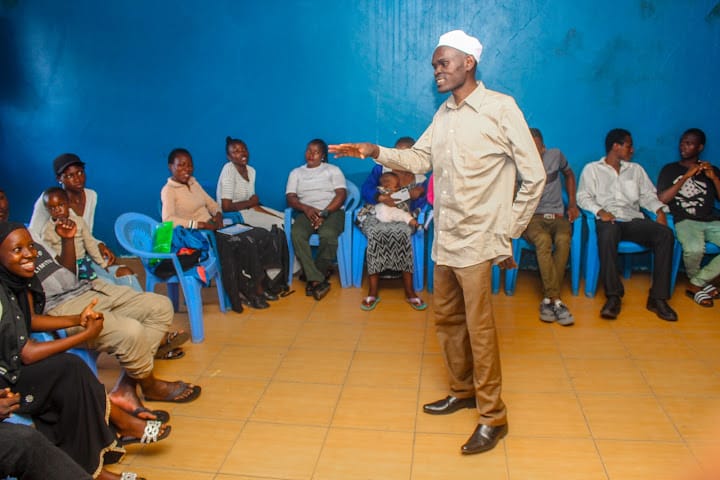
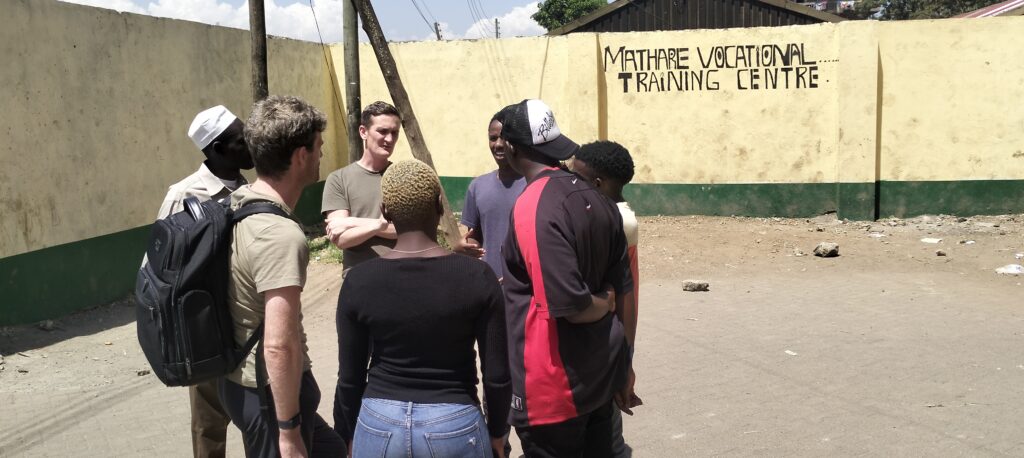
Mr. Caleb Ngala, a Shalom-SCCRR trained Community Facilitator guiding members of the Mathare Youth Group in a Conflict Situational Analysis session.
One of the most important lessons I learned through Shalom-SCCRR is that peacebuilding begins with individuals and extends to families and the wider community. Through these thoroughly organized training workshops, community forums and outreach programs, I have developed practical skills in conflict analysis, conflict transformation, negotiation/mediation and reconciliation. These skills have enabled me to confidently engage with different groups within Mathare, including youth groups, women, local leaders as well as vulnerable community members. The knowledge and experience I have steadily gained over time have greatly assisted me in advancing peacebuilding activities in Mathare. I have participated in community awareness programs aimed at discouraging violence, promoting peaceful coexistence and encouraging young people to become agents of positive change. In a community where many youths face challenges such as unemployment, crime, substance abuse and hopelessness, peacebuilding initiatives provide an opportunity to restore hope, dignity and unity.
Through the trainings and guidance of Shalom-SCCRR, I have also learned the importance of listening to community concerns and involving local people in identifying solutions to their own challenges. This holistic, participatory approach has strengthened trust among community members and encouraged collective responsibility in addressing issues affecting the community. Over the years, I have witnessed significant positive changes within the Mathare community. One notable change is the increasing involvement of young people in peace and development activities. More youths are now participating in community forums, leadership initiatives, skills training and awareness campaigns instead of engaging in violence or criminal activities. This shift has contributed to a reduction in conflicts and fostered a stronger sense of responsibility among the youth.

My journey with Shalom-SCCRR continues to inspire me to remain committed to peacebuilding and community service. The organization has not only empowered me with knowledge and practical skills but has also given me a platform to contribute positively to society. I believe that sustainable peace can only be achieved when communities work together, empower young people, and create opportunities for constructive, meaningful engagements and development. As I reflect on this journey, I remain grateful to Shalom-SCCRR for the mentorship, exposure and opportunities that have shaped my passion for peacebuilding. I look forward to continuing this work and contributing toward a more peaceful, united, and empowered Mathare community.
Historical Injustices and Violence in Mathare Informal Settlement and the Impact of Peacebuilding Activities by Shalom-SCCRR
Mathare slum is one of the oldest and most densely populated informal settlements in Kenya. Its history is deeply connected to colonial segregation, poverty, marginalization, political violence, and social injustices. Over the decades, the community has experienced recurring cycles of violence, especially during election periods, while also demonstrating resilience through community-led peacebuilding initiatives supported by Shalom-SCCRR.
Historical Injustices in Mathare
The roots of the challenges facing Mathare can be traced back to the colonial era in Kenya. Colonial urban planning policies segregated Africans from well-planned urban areas, forcing many people into overcrowded and underdeveloped settlements. After Kenya attained independence in 1963, the problems of land distribution and inadequate affordable housing persisted, leading to the rapid expansion of informal settlements/slums such as Mathare.
Residents of Mathare have long faced structural injustices/violence, including:
- Extreme poverty and unemployment
- Poor housing and sanitation
- Limited access to education, healthcare and public services
- Land and tenure insecurity
- Social exclusion and political marginalization
- Youth vulnerability to crime, gang activity, drug abuse and political manipulation
- Dysfunctional social institutions limiting the ability of residents to meet their basic human needs which are key to actualizing their potential
These injustices created an environment in which violence and conflict could easily emerge and spread.
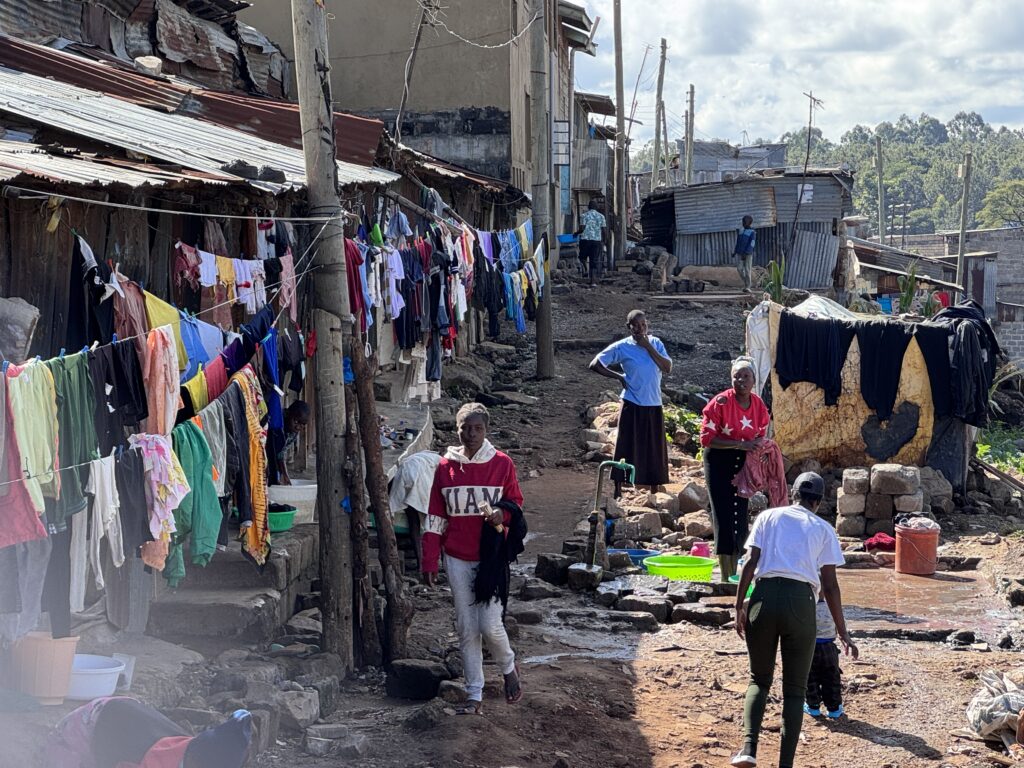
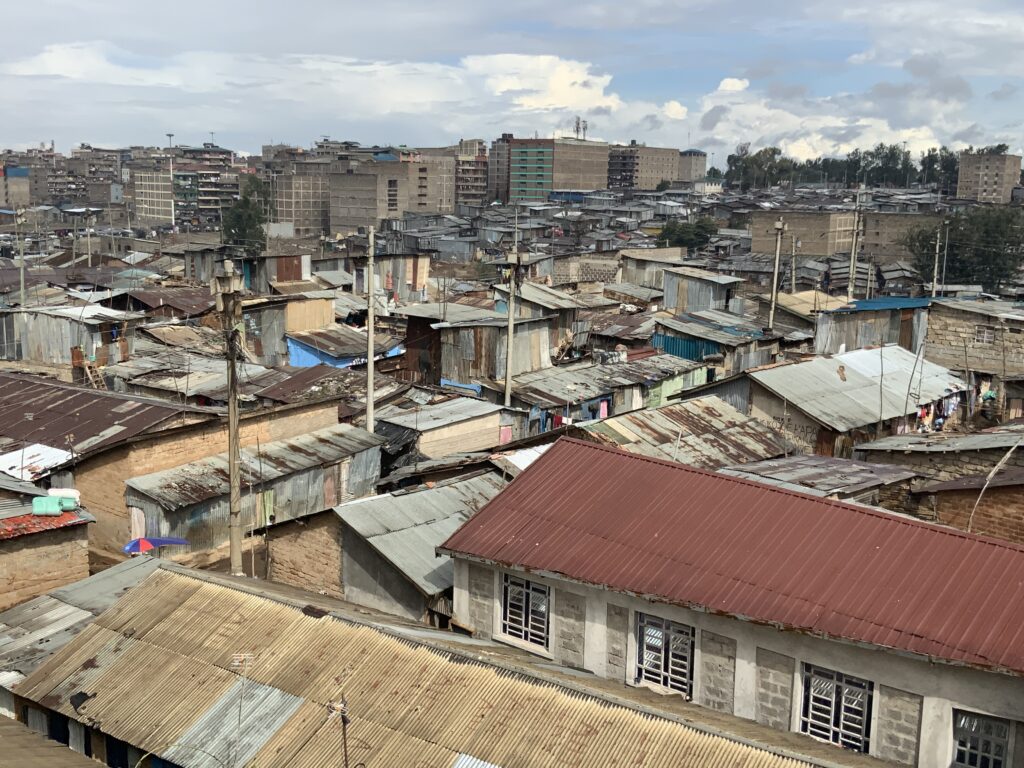
A section of Mathare Slums where Shalom-SCCRR works highlighting the social and economic conditions which act as drivers toward the persistence and community susceptibility to protracted conflict.
History of Violence in Mathare
Mathare has witnessed different forms of violence over the years. Political competition, ethnic tensions, criminal gangs, police brutality, and economic hardship have all contributed to instability within the settlement.
One of the most devastating periods was the 2007–2008 post-election violence in Kenya. Mathare became one of the major hotspots where ethnic clashes, destruction of homes, displacement of families, and loss of lives occurred. Women and children were heavily affected through gender violence, trauma, family separation and economic suffering.
The settlement has also experienced:
- Gang-related violence involving groups such as Mungiki and Taliban gangs
- Police harassment and alleged extrajudicial killings
- Political incitement among youths
- Drug abuse and criminal activities
- Competition over scarce resources and economic opportunities
These recurring conflicts have negatively affected social cohesion, security, and development within the community.
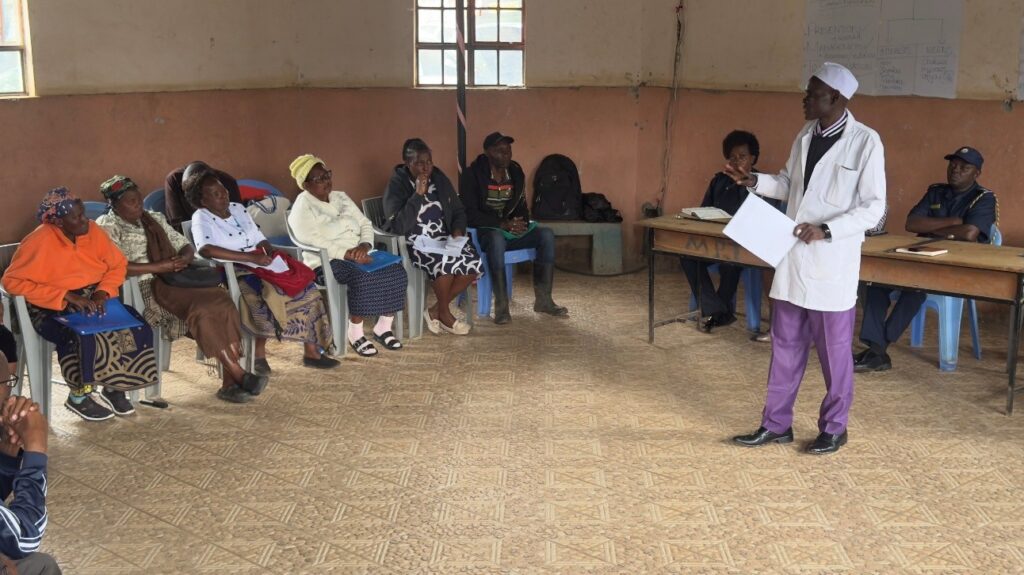
Mr. Ngala making his contributions on the issue of insecurity affecting Mathare community members in a Shalom-SCCRR training workshop which was attended by the Mathare Sub-County Administration.
Impact of Peacebuilding Activities by Shalom-SCCRR
In response to these challenges, Shalom-SCCRR has played an important role in promoting peace, reconciliation and conflict transformation for communities living in Mathare and as well as other informal settlements/slums in Nairobi.
Since 2016, when I joined Shalom-SCCRR, the organization has implemented grassroots peacebuilding interventions aimed at addressing the underlying causes and drivers of conflict rather than merely responding to violence after it occurs.
Key Peacebuilding Activities
The organization has carried out several important initiatives, including:
- Training youth leaders and community facilitators in various conflict prevention, management and transformation concepts
- Supporting peace clubs in schools
- Conducting peace education programs
- Supporting inter-ethnic and interreligious School/Educational Development Projects
- Facilitating women empowerment forums
- Encouraging community participation in peace and development initiatives
- Promoting trauma healing, reconciliation and social cohesion
- Fostering the dignity of life
Shalom-SCCRR has also worked closely with schools, local leaders, women’s groups and religious institutions to cultivate a culture of peaceful coexistence among communities.

Francis Mwangi, MA, and Moses Osiro, MA, from Shalom-SCCRR, together with Caleb Ngala and members of the Mathare community, engage Mr. Kamweti (center), the Headteacher of Kiboro Comprehensive School in Mathare. Shalom-SCCRR has supported the school through various School and Educational Development Projects and is currently implementing its Peace Education Program to promote a culture of peace and positive coexistence among learners and the wider community.
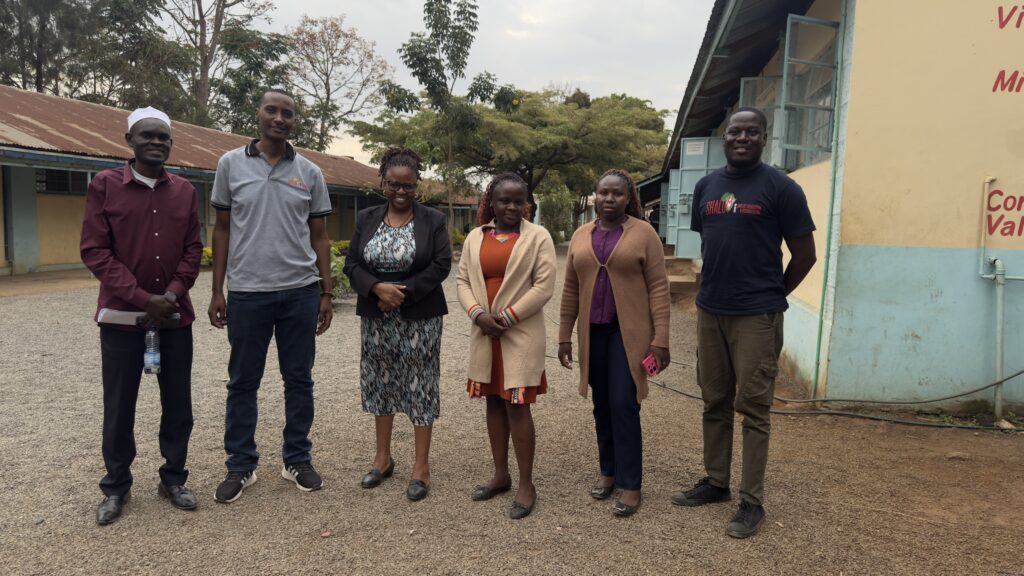
Francis Mwangi, MA, and Moses Osiro, MA, from Shalom-SCCRR, together with Mr. Caleb Ngala, engage Mrs. Ingrid (third from left), the Principal of Mathari Mixed Senior School, and two Peace Patrons during a Peace Education training activity and Needs Assessment visit. The engagement focused on strengthening the school’s capacity to promote peacebuilding, conflict resolution, and positive relationships among students and the wider school community.
Positive Impact on the Community
The peacebuilding interventions have contributed significantly to positive changes within Mathare, including:
- Reduced Ethnic Tensions
Community awareness forums and peace education programs have helped communities from different ethnic backgrounds interact peacefully and reduce stereotypes, fear and mistrust.
- Youth Empowerment
Many young people have gained knowledge and skills in conflict transformation, negotiation/mediation and reconciliation, reducing their vulnerability to political incitement, criminal gangs and violence.
- Improved Community Cohesion
Peace groups and community forums have strengthened relationships among residents and encouraged collective problem-solving and cooperation.
- Increased Awareness of Human Rights and Justice
Community members have become more informed about their rights and the importance of non-violent conflict resolution and social justice.
- Peace Education in Schools
Peace clubs established in schools have helped pupils, students and young learners embrace tolerance, develop a culture of peace and peaceful coexistence from an early age.
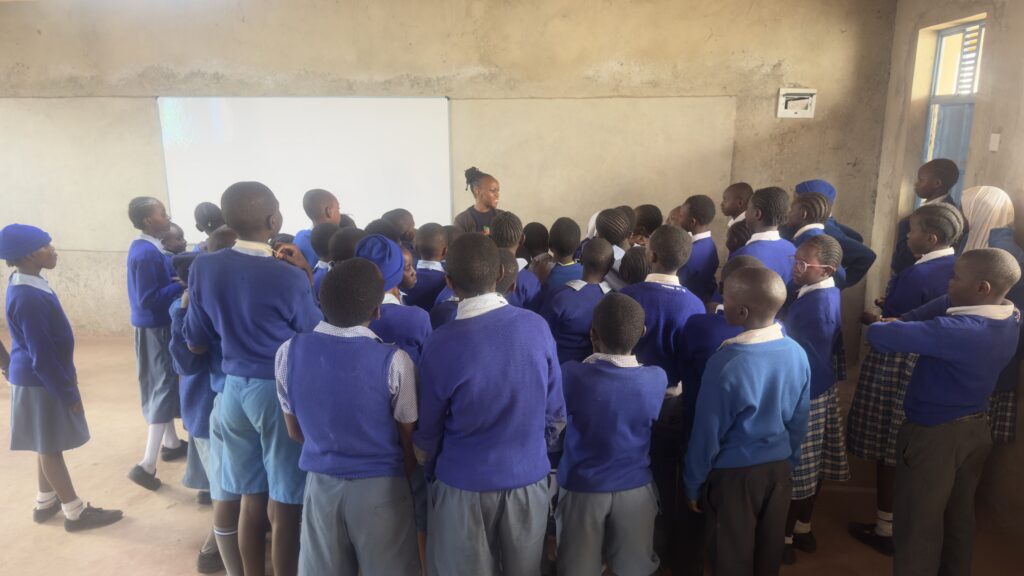
Ms. Julia Wangari (MA Candidate) from Shalom-SCCRR engaging young learners from Kiboro Comprehensive School in Mathare in a Peace Education activity which sought to establish and operationalize Peace Club activities in the school.
- Strengthened Women’s Participation in Peacebuilding
Women’s groups have actively participated in counseling, mediation, peace forums and supporting victims of violence, helping rebuild trust and unity within the community.
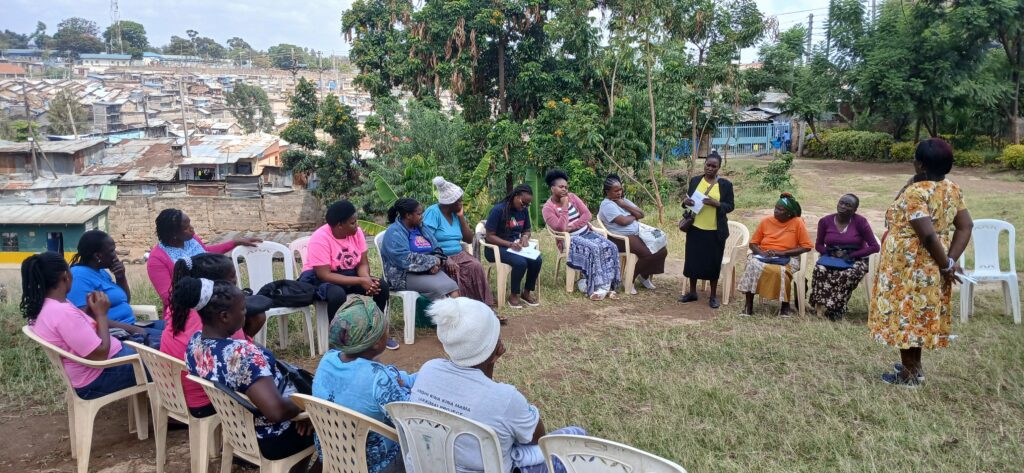
Ms. Esther Kibe, MA, of Shalom-SCCRR, facilitating a session for women from Mabatini Ward in Mathare during a community engagement forum aimed at identifying pathways for enhancing women’s proactive participation in peacebuilding within their communities. The forum provided a platform for dialogue, experience sharing, and the exploration of practical strategies to strengthen women’s roles in promoting peace, social cohesion, and conflict resolution at the grassroots level.
Conclusion
The history of Mathare informal settlement/slums reflects the long-term effects of historical injustices, marginalization, poverty and political violence. Despite these challenges, the community continues to demonstrate resilience through collective, collaborative peacebuilding efforts and local initiatives.
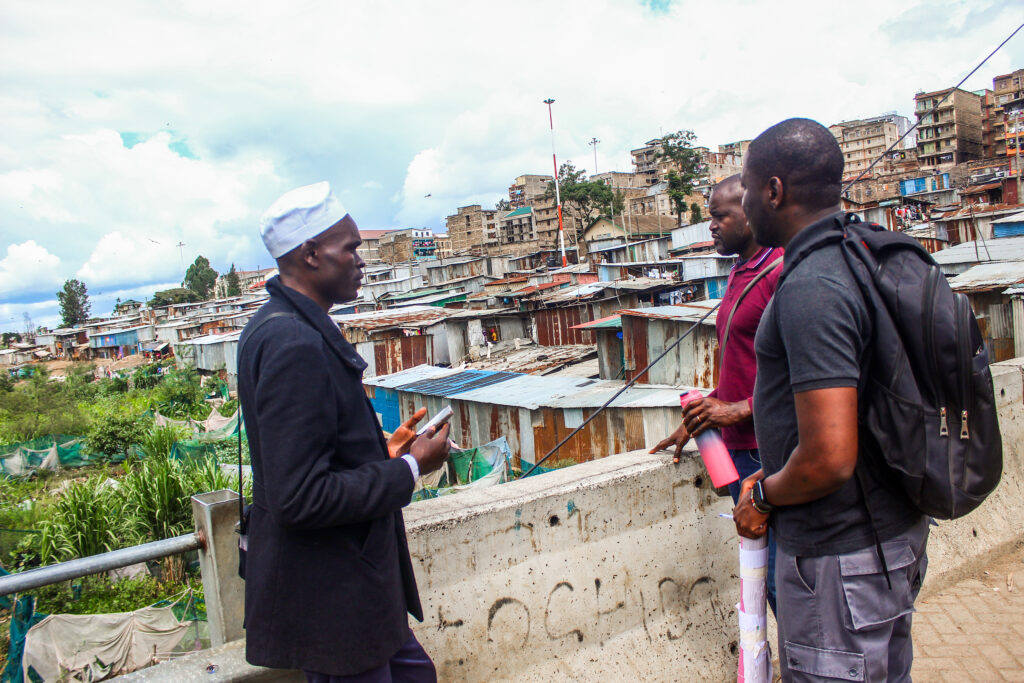
Mr. Caleb Ngala, together with Kennedy Akoko, MA, and Moses Osiro, MA, from Shalom-SCCRR, participated in a community engagement and conflict mapping exercise in Mlango Kubwa Ward, Mathare. The activity provided an opportunity to engage local residents and stakeholders in identifying key conflict drivers, peacebuilding opportunities, and community priorities to support the design and implementation of sustainable conflict prevention and resolution initiatives.
The interventions by Shalom-SCCRR have played a major role in transforming both people and social institutions, empowering local communities, reducing violence and promoting peaceful coexistence in Mathare. Through continuous education, mentorship and grassroots engagement, Shalom-SCCRR has helped nurture hope, reconciliation, sustainable peace and development within one of Nairobi’s most vulnerable communities. On behalf of my colleagues in Mathare, I am very grateful to the Shalom-SCCRR leadership, teams and donors in Africa, the USA, Ireland and the UK.
Authors:
Caleb Ngala, Shalom-SCCRR Community Facilitator, Mathare
Moses Osiro MA, Shalom-SCCRR Project Officer, Team Leader
Relevant Links:
- Shalom-SCCRR 16 Years Results and Achievements.
https://shalomconflictcenter.org/wp-content/uploads/2026/04/16-Years-Shalom-SCCRR-Results-and-Achievements-LV.pdf - Rev. Dr. Patrick Devine; Shalom-SCCRR Chairman’s Report for 2025. https://shalomconflictcenter.org/rev-dr-patrick-devine-shalom-sccrr-chairmans-report-for-2025/
- Shalom-SCCRR Chairman’s Report for 2025; Rev. Dr. Patrick Devine with pictures, captions, and links added by the Shalom-SCCRR Communication Department. https://shalomconflictcenter.org/shalom-sccrr-chairmans-report-for-2025-rev-dr-patrick-devine/
- 2025 School/Educational Development Results and Achievements.
https://shalomconflictcenter.org/2025-school-educational-development-results-and-achievements/ - 2025 Conflict Transformation & Peacebuilding Results and Achievements.
https://shalomconflictcenter.org/2025-conflict-transformation-peacebuilding-results-and-achievements/ - 2025 Shalom Empowerment Center (SEC) Addressing Violence Against Women and Children Results and Achievements.
https://shalomconflictcenter.org/2025-shalom-empowerment-center-sec-addressing-violence-against-women-and-children-results-and-achievements/ - Some of the Global Recognition of Shalom-SCCRR’s Conflict Transformation-Peacebuilding Approach. https://shalomconflictcenter.org/the-global-recognition-of-shalom-sccrrs-conflict-transformation-peacebuilding-approach/
- Rev. Dr. Patrick Devine’s Presentation at the Tangaza University, School of Philosophy Symposium.
https://shalomconflictcenter.org/rev-dr-patrick-devines-presentation-at-the-tangaza-university-school-of-philosophy-symposium/ - Devine, Patrick R. (2025). Shalom-SCCRR’s Conflict Transformation and Peacebuilding Intervention Methodology, Processes and Spiritual Rationale (Synopsis) with 16 years Results.
https://shalomconflictcenter.org/shalom-sccrr-intervention-methodology-conflict-management-continuum-diagram-and-a-brief-rationale-overview-with-16years-results/ - Shalom-SCCRR’s Peacebuilding Interventions; Leveraging Negotiation and Mediation to Realize Positive Peace for Communities Living in Kibera Slums, Nairobi, Kenya.
https://shalomconflictcenter.org/shalom-sccrrs-peacebuilding-interventions-leveraging-negotiation-and-mediation-to-realize-positive-peace-for-communities-living-in-kibera-slums-nairobi-kenya/ - Devine, Patrick R. (2025). Conflict and Religion in Eastern Africa: A Conceptual Consideration of Radicalization, Fundamentalism, Extremism, Terrorism, Tolerance, and Their Interaction Dynamics.
https://shalomconflictcenter.org/rev-dr-patrick-devine-conflict-and-religion-in-eastern-africa-a-conceptual-consideration-of-radicalisation-fundamentalism-extremism-terrorism-tolerance-and-their-interaction-dynamics/