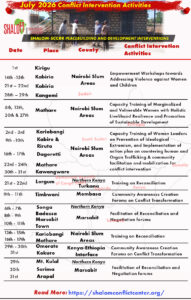

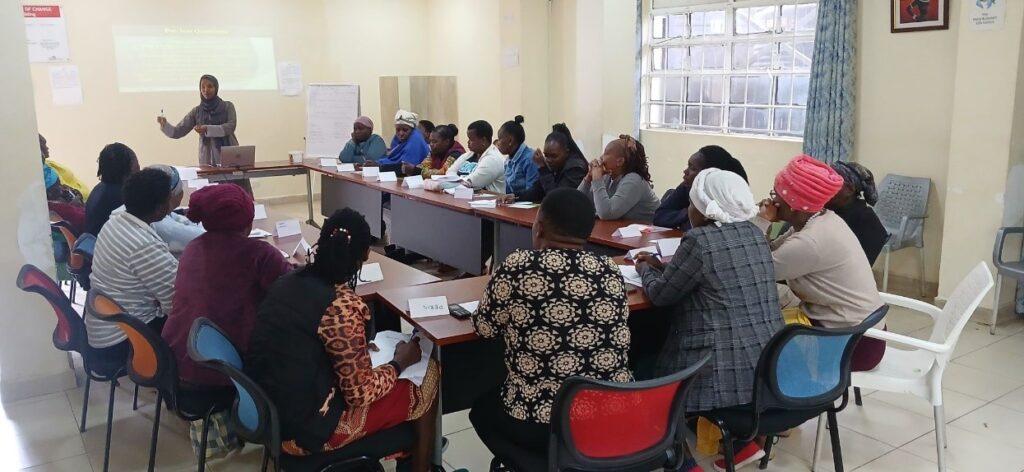
Over the past 16 years, Shalom-SCCRR has equipped 23,419 women with conflict analysis skills and peacebuilding techniques, generating conflict transformation and reconciliation in conflict-affected communities. Of this number, 15,291 women—primarily from slums and informal settlements—have been trained through the Shalom Empowerment Center (SEC) Addressing Violence Against Women and Children Program.


In the pastoralist communities of Samburu, Marsabit, Turkana, West Pokot, Baringo, and Elgeyo Marakwet counties in Kenya, entrenched cultural norms have traditionally restricted women’s participation in peacebuilding and decision-making processes. Within the Shalom Peace Groups, women initially constituted only 2% of participants in community peace and development forums. Through Shalom-SCCRR’s sustained empowerment and capacity-building interventions, women’s participation has risen to an average of 43%, marking a 41% increase.


In 2024 and 2025, 470 women from the slums and informal settlements were trained and empowered with practical skills to start and effectively manage small business enterprises, enhancing their livelihoods and economic resilience.


Since its establishment in 2022, the Shalom Empowerment Center (SEC) Addressing Violence Against Women and Children has successfully conducted 459 women’s empowerment workshops (15,291 trained to date), strengthening women’s capacity for peacebuilding, conflict transformation, and economic livelihood resilience. These programs have primarily targeted women from conflict-affected urban informal settlements, slums, and pastoralist areas where the Kenya-Ethiopia-South Sudan interface with each other.
As part of the training and empowerment in 2024, a new module on preventing and countering Human and Organ trafficking was introduced, ‘Shalom-SCCRR Launch of the Human and Organ Trafficking Module and Women Empowerment.’

Appreciation to our Donors and Supporters
We appreciate all our donors, partners, and stakeholders whose continued support has enabled Shalom-SCCRR to actualize these women’s empowerment interventions in both the urban informal settlements/slums and the remote arid and semi-arid terrains in Eastern Africa where Shalom-SCCRR works. Through the Shalom Empowerment Center (SEC), Shalom-SCCRR is working to ensure the human rights and dignity of both women and children are respected and honored, thereby empowering them to be significant architects of their security, sustainable peace, and development.

Impact of Grassroots Action Plans by Shalom-SCCRR–Trained Women
Enhanced Capacity to Address All Forms of Violence
SEC-trained women have enhanced capacity to deal with all forms of manifest and structural violence, inter-ethnic, inter-religious, domestic violence, and sexual violence, etc.
Active Participation in Conflict Negotiation and Resolution
Trained women effectively participate in conflict negotiations, helping to resolve disputes and build lasting peace within their communities, promoting inclusivity and leading to more sustainable, community-driven peace outcomes.
Community Mediation and Social Cohesion Building
SEC-trained women actively address and mediate conflicts within their communities, contributing to improved social cohesion and coexistence.
Psychosocial and Material Support to Survivors of Violence
SEC women’s groups provide psychosocial and material support to women, youth, and children affected by domestic and community violence, helping to restore dignity, security, and healing among survivors.
Combatting Human and Organ Trafficking in Urban Informal Settlements
Empowering and sensitizing community leaders and duty bearers on the scourge of human and organ trafficking, its prevalence, impacts, and effective strategies to combat it within urban informal settlements.
Women’s Role in Preventing Radicalization into Religious Ideological Extremism
Shalom-SCCRR–trained women are actively preventing the recruitment of youth into radical organizations espousing religious ideological extremism by promoting tolerance, fostering interfaith initiatives, and strengthening community vigilance.
Women as Advocates and Change Agents for Peace and Leadership
Women are advocates and activists for peace and positive change in their communities by raising awareness, lobbying, and promoting increased participation of women in peacebuilding, leadership roles, and as empowered decision makers.
Economic Empowerment and Livelihood Development for Stability
Through their livelihood and economic empowerment initiatives, trained women can assess their environment and identify income-generating opportunities, fostering their personal development but also contributing to their families’ economic stability.
By:
Esther Kibe, MA, Shalom-SCCRR, Women’s Project Officer.
Francis Mwangi, MA, Shalom-SCCRR Monitoring, Evaluation, Reporting, and Learning (M.E.R.L) Department.
Relevant Links
- Shalom-SCCRR. (2022). Shalom Empowerment Center (SEC) Addressing Violence against Women and Children: Concept Document. https://shalomconflictcenter.org/eastern-africa-shalom-empowerment-center-sec-addressing-violence-against-women-and-children-concept-document/
- Kibe, E & Osiro, M. (2024). Shalom-SCCRR’s Vital Role in Addressing All Acts of Violence Against Women and Children. https://shalomconflictcenter.org/shalom-sccrrs-vital-role-in-addressing-all-acts-of-violence-against-women-and-children/
- Domit, P. S. & Devine, P. (2024). Shalom Center for Conflict Resolution and Reconciliation (SCCRR): Addressing the Violence of Human and Organ Trafficking. https://shalomconflictcenter.org/shalom-center-for-conflict-resolution-and-reconciliation-sccrr-addressing-the-violence-of-human-and-organ-trafficking/
- Shalom-SCCRR. (2024). Shalom-SCCRR Condemns Femicide and All Acts of Violence Against Women.https://shalomconflictcenter.org/shalom-sccrr-condemns-femicide-and-all-acts-of-violence-against-women/
- Shalom-SCCRR Launch of the Human and Organ Trafficking Module and Women Empowerment. https://youtu.be/5e9tCDeh1fY
- Otsieno, J. (2023). Empowering Women, Building Peace: Launching Shalom Empowerment Center (SEC) addressing Violence against Women and Children in Lodwar, North Western Kenya.https://shalomconflictcenter.org/empowering-women-building-peace-launching-shalom-empowerment-center-sec-addressing-violence-against-women-and-children-in-lodwar-north-western-kenya/
- Devine, P. R. (2025). Conflict and Religion in Eastern Africa: A Conceptual Consideration of Radicalisation, Fundamentalism, Extremism, Terrorism, Tolerance, and Their Interaction Dynamics. https://shalomconflictcenter.org/wp-content/uploads/2025/07/Patrick-Devine-Tangaza-Journal-Conflict-and-Religion-in-Eastern-Africa-Jun-2025.pdf
- Otsieno, J. & Kibe, E. (2022). Shalom Empowerment Center (SEC) Addressing Violence against Women and Children: A Unique Shalom-SCCRR Initiative Opened. https://shalomconflictcenter.org/shalom-empowerment-center-sec-addressing-violence-against-women-and-children-a-unique-shalom-sccrr-initiative-opened/
- Otsieno, J. (2023). Empowering Women to Transform Conflict with Expertise: Shalom-SCCRR’s Initiatives in Conflict-Affected Areas of Northern Kenya. https://shalomconflictcenter.org/empowering-women-to-transform-conflict-with-expertise-shalom-sccrrs-initiatives-in-conflict-affected-areas-of-northern-kenya/
- Kibe, E, & Otsieno, J. (2023). Shalom-SCCRR continues to Empower Women with Conflict Analytical Skills and Peacebuilding Techniques in Marginalized Environments. https://shalomconflictcenter.org/happy-international-womens-day-4/
- Kipkoech, K. & Ndiema, R. (2025, Oct 6). Stewardship at the Shalom Center for Conflict Resolution and Reconciliation (SCCRR). https://shalomconflictcenter.org/stewardship-at-the-shalom-center-for-conflict-resolution-and-reconciliation-sccrr/
- Abdi, H., Okoth, G., & Kibe, E. ( 2025, Nov 20). Transforming Ideological Extremism and Radicalization among Kenyan Communities in the coastal area of Timbwani, Likoni, Mombasa County. https://shalomconflictcenter.org/transforming-ideological-extremism-and-radicalization-among-kenyan-communities-in-the-coastal-area-of-timbwani-likoni-mombasa-county/
- Magero, A. (2025, Oct. 28). From Valley of Death to Valley of Peace: Shalom-SCCRR’s Ongoing Transformative Interventions in Kerio Valley. https://shalomconflictcenter.org/from-valley-of-death-to-valley-of-peace-shalom-sccrrs-ongoing-transformative-interventions-in-kerio-valley/
- Devine, P.R. (2025). The Ilemi Triangle Environs: Delineating the Causes and Consequences of the Turkana-Dassenach Conflict. Shalom Center for Conflict Resolution and Reconciliation (Shalom-SCCRR).
- Devine, P.R. (2024). Persistent Conflict Between the Pokot and the Turkana: Causes and
Policy Implications. 2nd Ed. Notion Press. - Kitonga, D. M., Ndiga, B., & Noonan, O. (2025). Contributions of Social Community Structures on Conflict Management among Pastoral Communities in the Ilemi Triangle. Eastern African Journal of Humanities and Social Sciences, 4(1), 68-76. https://doi.org/10.58721/eajhss.v4i1.874
- Kitonga, D. M., & Noonan, O. (2024). Sustainable Conflict Management in the Ilemi Triangle. Journal of Humanities and Social Science. 29(11), 45-53.https://www.iosrjournals.org/iosr-jhss/papers/Vol.29-Issue11/Ser-3/F2911034553.pdf
- Noonan, O., & Bosco, K. J. (2024). The Dynamics of Decision-Making Processes in Sustainable Conflict Management in the Ilemi Triangle. International Journal of Social Science Research and Review, 7(11), 84-96. https://doi.org/10.47814/ijssrr.v7i11.2377
- Shalom-SCCRR. (2025, Oct 3). Rev. Dr. Patrick Devine 2025 International Lectures and Presentations. https://shalomconflictcenter.org/rev-dr-patrick-devine-2025-international-lectures-and-presentations/
- Shalom-SCCRR. (2025, June 4). Shalom-SCCRR 15 Years Results and Achievements. https://shalomconflictcenter.org/shalom-sccrr-15-years-results-and-achievements/